Scott B. Weingart
Historian masquerading as a Chief Technology Officer
Elevating thoughtful experts with the resources they need to build a more connected, scientifically engaged, and culturally vibrant future.
Contents
Appointments
2025–ongoing
Library of VirginiaInaugural Chief Technology Officer
2025–ongoing
Dartmouth CollegeResident Scholar, Digital Humanities and Social Engagement
2023–2026
University of EdinburghResearch Affiliate, Centre for Data, Culture & Society
2022–2025
National Endowment for the Humanities, United States GovernmentInaugural Chief Data OfficerInaugural Director, Office of Data and Evaluation
☜︎ Until DOGE
2021–2022
University of Notre DameInaugural Director, Navari Family Center for Digital ScholarshipAssociate Librarian (Faculty), Hesburgh LibrariesAffiliated Faculty, Lucy Family Institute for Data & Society
2015–2021
Carnegie Mellon UniversityInaugural Program Director of Digital HumanitiesAssistant Librarian (Faculty), Hunt LibraryCore Faculty, Humanities AnalyticsAffiliated Faculty, The Simon Initiative
2014
Stanford UniversityData Scientist, Stanford University Libraries
2009–2014
Indiana UniversityResearch Associate, Cyberinfrastructure for Network Science Center
2006–2009
University of FloridaResearch Assistant, History of Science Department & Digital Library Center
Education
forthcoming
Ph.D. Digital Humanities, Film, Media, and Creative Technologies, University of Portsmouth
2019
M.Sc. Data Science, School of Informatics and Computing, Indiana University
2009
B.A. History of Science (minor: Computer Engineering), University of Florida
Roles & Responsibilities
Library of Virginia
Inaugural Chief Technology Officer
Provides strategic vision and operational leadership for the Library of Virginia’s IT and digital initiatives, supporting its many missions as the library at the seat of government, the state’s archive, a public humanities institution, a specialized research library, and a state agency supporting public libraries throughout Virginia. Oversees web applications, digital engagement, and digital collections of over 130 million objects, and the management of critical systems like Alma, Primo, and Rosetta.
National Endowment for the Humanities, United States Government
Inaugural Chief Data Officer
Inaugural Director, Office of Data and Evaluation
NEH senior leadership team member responsible for evidence-informed decision making, and for keeping the U.S. public informed of the state, health, and value of the humanities.
Executive Leadership. Shaped data, evaluation, & AI policy impacting $170 million in annual grantmaking. Furnished evidence to advise leadership. Led strategic planning, risk management, and related activities. Oversaw statistical clearinghouse on the state & value of the humanities.
Strategic Partnerships. Built partnerships with other federal agencies, private philanthropies, and non-profits. Represented NEH on federal chief data officer council. Supported data and evaluation capacity building across 56 State and Jurisdictional Humanities Councils. Maintained NEH data infrastructure.
Program Management. Led multimillion-dollar grantmaking and contract initiatives.
University of Notre Dame
Inaugural Director, Navari Family Center for Digital Scholarship
Associate Librarian (Faculty), Hesburgh Libraries
Affiliated Faculty, Lucy Family Institute for Data & Society
- Served on Hesburgh Libraries’ senior leadership administrative body, the Library Cabinet.
- Directed 11,500 ft², $10+ million endowed research center with a technology lending library; data science support services; grant & fellowship programs; and specialized facilities including a makerspace, VR room, and dataviz wall.
- Supervised 15+ faculty, staff, postdocs, & students (including the heads of the Business & Architecture branch libraries with their own additional spaces and staff).
- Conducted, presented, and authored research at the intersection of data science & society.
Carnegie Mellon University
Inaugural Program Director of Digital Humanities
Assistant Librarian (Faculty), Hunt Library
Core Faculty, Humanities Analytics
Affiliated Faculty, The Simon Initiative
- Directed five-year, $2 million program to make CMU a leader in the Digital Humanities
- Managed faculty, developers, students, interns, & other staff on dozens of projects.
- Administered internal grant and fellowship programs dispersing $100k/year.
- Designed and implemented technical infrastructure supporting digital humanities across campus.
- Conducted, presented, and authored research at the intersection of data science & society.
- Taught data analysis, research methods, and history courses to students, faculty, & staff.
Highlights of Note
Service-Oriented Leader
Four-time inaugural director of initiatives that last. Builds teams and coalitions across sectors and disciplines that are mission-oriented, energized, and effective. Empathetic servant leader focused on maintaining the boring technical infrastructure that keeps the world running smoothly.
Interdisciplinary Historian of Science
Author of two books and dozens of articles spanning the humanities, social sciences, and natural sciences which leverage computation to illuminate the human experience. Collectively, these publications have accrued 4,000 citations, appeared on over 1,000 academic syllabi, and been translated into eight languages.
Recognized Expert in Field
Recipient of the Fortier Prize by the Alliance of Digital Humanities Organizations, and the Best Formative Initiative prize by La Asociación de Humanidades Digitales Hispánicas. Keynote speaker at international conferences. Principal investigator of or contributor to the securing of $17 million in grants by organizations including the National Institutes of Health, the National Science Foundation, the National Endowment for the Humanities, the Getty Foundation, and the Mellon Foundation.
Community Contributor
Elected executive board member of scholarly societies and invited board member on several global cultural and research initiatives. Conference convener. Volunteer strategic planner and head of IT for local religious organizations. Maintainer of frequently-used digital archival resources.
Performer
Professional performer and instructor of juggling and associated circus arts.
Extended Biography
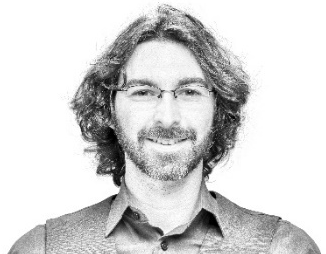
Scott B. Weingart is a leader, former federal policy maker, and acclaimed scholar building a thoughtful future through human-centered technology. Before steering initiatives across academic and public sectors, he spent time as a historian of science, a librarian, a data scientist, and a professional circus performer.
As its Chief Technology Officer, Weingart supports the Library of Virginia in its many missions as the library at the seat of government, the state’s archive, a public humanities institution, a specialized research library, and the state library agency supporting public libraries throughout Virginia. Weingart concurrently serves as a Resident Scholar at Dartmouth College and a Research Affiliate at the University of Edinburgh.
Before DOGE cut most of his agency, Weingart was the Chief Data Officer and founded the Office of Data and Evaluation at the National Endowment for the Humanities (NEH). As part of NEH’s senior leadership team, he oversaw data operations, analysis, and strategy at the federal agency. Weingart championed data-informed decision making at NEH and kept the public informed on the state and impact of the humanities in the United States. His office did so through grant program impact assessments; activities reports to the federal government and the public; direct grantmaking; and ongoing non-profit, governmental, and research partnerships.
Previously, Weingart directed the University of Notre Dame’s Navari Family Center for Digital Scholarship and Carnegie Mellon University’s Digital Humanities program. In these roles, Weingart led large teams pursuing and supporting the critical use of emerging technologies by scholars, librarians, and students across disciplines. He has also served in elected roles as a treasurer for the Alliance of Digital Humanities Organizations and an executive council member of the Association for Computers and the Humanities.
Weingart is a prize-winning author of dozens of books and articles who leverages computation to illuminate the human experience. The Network Turn (Cambridge University Press, 2020)—co-authored with Ruth Ahnert, Sebastian Ahnert, and Nicole Coleman—is a manifesto for the adoption of network approaches and metaphors in the humanities. A special issue of the Journal of Literary Theory is dedicated to the book’s central claim. The Historian’s Macroscope: Exploring Big Historical Data (Imperial College Press, 2014)—co-authored with Shawn Graham and Ian Milligan—is a popular introductory textbook for digital history which introduced the now-common term ‘macroscope’ to the digital humanities community, and it proved successful enough to warrant an updated edition in 2022 (with added author Kim Martin).
Weingart’s research spans disciplines, including e.g., folklore, science modeling, philosophy, data ethics, history, biodiversity, data visualization, computer vision, network science, archaeology, and web archiving, and his publications have been translated into Chinese, Dutch, French, Italian, Portuguese, Russian, Spanish, and Ukrainian. The National Institutes of Health, the National Science Foundation, the National Endowment for the Humanities, the Andrew W. Mellon Foundation, and the Getty Foundation have all funded his work. For their pioneering research on representations of gender and the body in European fairy tales, the Alliance of Digital Humanities Organizations awarded the prestigious Paul Fortier Prize in Digital Humanities to Weingart and his colleague Jeana Jorgensen in 2011.
Weingart’s career is unified by his commitment to a more ethical, impactful, and intellectually sound scholarly and cultural landscape.
Academic Books
peer reviewed
2022
Graham, S., Milligan, I., Weingart, S.B.,
& Martin, K. (2022).
Exploring Big Historical Data: The Historian’s Macroscope, 2nd edition. London: World Scientific Press.
10.1142/12435 ❧ read
2020
Ahnert, R., Ahnert, S.E., Coleman, N.,
& Weingart, S.B. (2020).
The Network Turn. Cambridge: Cambridge University Press.
10.1017/9781108866804 ❧ read
2014
Graham, S., Milligan, I.,
& Weingart, S.B. (2014).
Exploring Big Historical Data: The Historian’s Macroscope. London: Imperial College Press.
10.1142/p981 [Translated into and published in Chinese.]
❧ read
Non-Academic Books
not peer reviewed
2010
Weingart, S.B. et al. (2010).
Science of Science (Sci2) Tool User Manual. Digital Publication.
❧ read
2009
Börner, K. et al. (2009).
Network Workbench Tool User Manual. Digital Publication.
❧ read
Articles & Chapters
peer reviewed
unpublished
Weingart, S.B. (unpublished). The Networked Structure of Early Modern Science. Journal of the Association for Information Science and Technology.
Sack, G.
& Weingart, S.B. (2018). Literary Network Analysis. In J. O’Sullivan (Ed.)
Digital Humanities for Literary Studies: Theories, Methods, and Practices. University Park: Pennsylvania State University Press. [Book never published]
❧ read
2024
Conroy, M., Gillmann, C., Harvey, F., Mchedlidze, T., Fabrikant, S., Windhager, F., Scheuermann, G., Weingart, S.B., Tangherlini, T., Warren, C., Rehbein, M., Börner, K., Elo, K., Jäncke, S., Kerren, A., Nöllenburg, M., Dwyer, T., Eide, Ø., Kobourov, S.,
& Betz, G. (2024). Uncertainty in Humanities Network Visualization.
Frontiers in Communication, 7.
10.3389/fcomm.2023.1305137 ❧ read
2021
Lincoln, M., Weingart, S.B.
& Eichmann-Kalwara, N. (2021). The Index of Digital Humanities Conferences.
Journal of Open Humanities Data, 7(12).
10.5334/johd.26 ❧ read
Heberling, J.M., Miller, J.T., Noesgaard, D., Weingart, S.B.,
& Schigel, D. (2021). Data integration enables global biodiversity synthesis.
Proceedings of the National Academy of Sciences, 118(6).
10.1073/pnas.2018093118 ❧ read
2020
Gómez, F., Weingart, S.B., Mulligan, R.,
& Evans, D. (2019/2020). The Latin American Comics Archive (LACA): an online platform housing digitized Spanish-language comics as a tool to enhance literacy, research, and teaching through scholar / student collaboration.
Cuadernos del Centro de Estudios en Diseño y Comunicación, 89.
10.18682/cdc.vi89.3789 ❧ read
2019
Burton, M., Lavin, M., Otis, J.,
& Weingart, S.B. (2019). Digits: Two Reports on New Units of Scholarly Publication.
Journal of Electronic Publishing, 22(1).
10.3998/3336451.0022.105 ❧ read
Eichmann, N., Jorgensen, J.,
& Weingart, S.B. (2019). Representation at Digital Humanities Conferences (2000–2015). In J. Wernimont
& E. Losh (Eds.)
Bodies of Information: Intersectional Feminism and Digital Humanities. Minneapolis: University of Minnesota Press.
10.5749/j.ctv9hj9r9.9 ❧ read
2017
Weingart, S.B.
& Eichmann, N. (2017). What’s Under the Big Tent? A Study of ADHO Conference Abstracts.
Digital Studies / Le champ numérique, 7(1).
10.16995/dscn.284 ❧ read
Ladd, J., Otis, J., Warren, C.,
& Weingart, S.B. (2017). Exploring and Analyzing Network Data with Python.
The Programming Historian, 6. [Translated into and published in Ukrainian, Portuguese, and French.]
10.46430/phen0064 ❧ read
2016
Van den Heuvel, C., Weingart, S.B., Spelt, N.,
& Nellen, H. (2016). Circles of Confidence in Correspondence.
Nuncius, 31(1).
10.1163/18253911-03101002 ❧ read
Langmead, A., Otis, J., Warren, C., Weingart, S.B.,
& Zilinski, L. (2016). Towards Interoperable Network Ontologies for the Digital Humanities.
International Journal of Humanities and Arts Computing, 10(1-2).
10.3366/ijhac.2016.0157 ❧ read
2015
Ekbia, H., Mattioli, M., Kouper, I., Arave, G., Ghazinejad, A., Bowman, Ratandeep Suri, V., Tsou, A., Weingart, S.B.,
& Sugimoto, C. (2015). Big data, bigger dilemmas: A critical review.
Journal of the Association for Information Science and Technology, 66(8).
10.1002/asi.23294 ❧ read
Sugimoto, C.
& Weingart, S.B. (2015). The Kaleidoscope of Disciplinarity.
Journal of Documentation, 71(4).
10.1108/JD-06-2014-0082 ❧ read
Weingart, S.B. (2015). Finding the History and Philosophy of Science.
Erkenntnis, 80(1).
10.1007/s10670-014-9621-1 ❧ read
Graham, S.
& Weingart, S.B. (2015). The Equifinality of Archaeological Networks: An Agent-Based Exploratory Lab Approach.
Journal of Archaeological Method and Theory, 22(1).
10.1007/s10816-014-9230-y ❧ read
2014
Graham, S., Milligan, I.,
& Weingart, S.B. (2014). Writing
The Historian’s Macroscope in Public.
Perspectives on History, 52(7).
❧ read
Weingart, S.B. (2014). Planned IVMOOC Extensions. In K. Börner & D. Polley (Eds.) Visual Insights. Boston: MIT Press.
2013
Weingart, S.B. (2013). From trees to webs: uprooting knowledge through visualization. In A. Slavic, A. Akdag Salah,
& S. Davies (Eds.)
Classification and visualization: interfaces to knowledge. Würzburg: Ergon Verlag.
❧ read
Weingart, S.B.
& Jorgensen, J. (2013). Computational Analysis of the Body in European Fairy Tales.
Literary and Linguistic Computing, 28(3).
10.1093/llc/fqs015 ❧ read
Weingart, S.B.
& Meeks, E. (2013). The Digital Humanities Contribution to Topic Modeling.
Journal of Digital Humanities, 2(1).
❧ read
Thelwall, M., Tsou, A., Weingart, S.B., Holmberg, K.,
& Haustein, S. (2013). Tweeting links to academic articles.
Cybermetrics, 17(1).
❧ read
Milojevic, S., Hemminger, B., Leydesdorff, L., Weingart, S.B., Chen, C.,
& Priem, J. (2013). Information Visualization State-of-the-Art and Future Directions.
Proceedings of the ASIS&T Annual Meeting, 49(1).
10.1002/meet.14504901155 ❧ read
2012
Graham, S., Weingart, S.B.,
& Milligan, I. (2012). Getting Started with Topic Modeling and MALLET.
The Programming Historian, 1. [Translated into and published in Spanish.]
10.46430/phen0017 ❧ read
2011
Weingart, S.B. (2011). Demystifying Networks.
Journal of Digital Humanities, 1(1).
❧ read
Guo, H., Weingart, S.B.,
& Börner, K. (2011). Mixed-Indicators Model for Identifying Emerging Research Areas.
Scientometrics, 89(1).
10.1007/s11192-011-0433-7 ❧ read
2010
Allen, C., Murdock, J., Buckner, C.,
& Weingart, S.B. (2010). An API for Philosophy.
APA Newsletter on Philosophy and Computers, 10(1).
❧ read
Selected Other Publications
not peer reviewed
2025
National Endowment for the Humanities. (2025). State and Impact of the Humanities: Funding Opportunity 20250416-XO.
National Endowment for the Humanities Office of Data and Evaluation Notice of Funding Opportunity (NOFO).
❧ read
2024
Alpert-Abrams, H., Unger, J., Weingart, S.B., Lazopoulos, G., Rodriguez, L.,
& Skinner, B. (2024). Assessing the State of the Humanities: Preliminary Feedback on a Proposed Data-Driven Research Grant Program.
National Endowment for the Humanities Office of Data and Evaluation Report.
❧ read
2021
Weingart, S.B.
& Lincoln, M. (2021). CMU Library Labs (2020–2024).
CMU Library Lab White Paper.
10.1184/R1/13522718 ❧ read
2020
Lincoln, M., & Weingart, S.B. (2020). CMU Libraries Tech Report, Fall 2020. CMU Library Lab White Paper.
white paper
Corrin, J., Davis, E., Lincoln, M.,
& Weingart, S.B. (2020). CAMPI: Computer-Aided Metadata Generation for Photo archives Initiative.
CMU Library Lab White Paper.
10.1184/R1/12791807 ❧ read
2019
Weingart, S.B. (2019). Networks in the Humanities: Challenges
& Opportunities. In K. Börner, O. Eide, T. Mchedlidze, M. Rehbein,
& G. Scheuermann (Eds.)
Network Visualization in the Humanities.
Dagstuhl Reports, 8(11).
10.4230/DagRep.8.11.139
Conroy, M., Elo, K., Heyer, G., Jannidis, F., Rehbein, M., Symvonis, A.,
& Weingart, S.B. (2019). Visualizing Networks and Temporality. In K. Börner, O. Eide, T. Mchedlidze, M. Rehbein,
& G. Scheuermann (Eds.)
Network Visualization in the Humanities.
Dagstuhl Reports, 8(11).
10.4230/DagRep.8.11.139 ❧ read
Weingart, S.B. (2019). The Route of a Text Message.
Motherboard, an imprint of
VICE. [Translated into and published in Dutch, Italian, and Russian.]
❧ read
2018
Sloan, R. et al. (2018). The Center for Midnight.
Digital Publication.
https://www.robinsloan.com/center-for-midnight/ ❧ read
2016
Weingart, S.B. (2016). Stigma.
Inside Higher Ed.
❧ read
2013
Craig, K. & Weingart, S.B. (2013). Coding the Bishop. Digital Publication.
Edited Volumes
2013
Weingart, S.B.
& Meeks, E. (Eds.) (2013).
Journal of Digital Humanities, 2(1).
❧ read
Selected Awards, Honors, & Funding
2024
Goulding, R. & Weingart, S.B. (US Team) with Jeffries, N. & Hawkins, M. (UK Team). (2022–2024). Unlocking Digital Texts: Towards an Interoperable Text Framework. NEH/AHRC New Directions for Digital Scholarship in Cultural Institutions.
$150,000 + £250,000
2023
Kilbane, M., Dhaliwal, R.S., Bird, A., Walden, K., & Weingart, S.B. (2022–2023). Data Poetics. Lucy Family Institute for Data & Society.
$5,000
2021
Langmead, A., Helmreich, A., & Weingart, S.B. (2018–2021). Art History and Network Analysis (NA-DAH), Advanced Digital Institute. The Getty Foundation.
$225,000
2020
Weingart, S.B., Eichmann-Kalwara, N., & Lincoln, M. (2020). The Index of Digital Humanities Conferences. 1st Runner Up, Best DH Dataset, awarded by DH Awards 2020.
2019
Otis, J. & Weingart, S.B. (2018–2019). The Bridges of Pittsburgh. Berkman Faculty Development Fund.
$5,400
2018
Gómez, F., Weingart, S.B., Evans, D., & Mulligan, R. (2018). LACA - Archivo del Cómic Latinoamericano. Mejor iniciativa formativa (Best formative initiative), awarded by La Asociación de Humanidades Digitales Hispánicas (HDH).
Weingart, S.B., Burton, M., Lavin, M., & Otis, J. (2017–2018). Digits Planning Grant. The A.W. Mellon Foundation.
$60,000
Warren, C., Shore, D., Otis, J., & Weingart, S.B. (2016–2018). Six Degrees of Francis Bacon. NEH Office of Digital Humanities. [Note: Co-PI in practice, but not officially listed as such in NEH records on account of institutional rules at the time]
$325,000
2017
Warren, C., Shore, D., Otis, J. & Weingart, S.B. (2017). Six Degrees of Francis Bacon Design Sprint. Frank-Ratchye Fund for Art at the Frontier (FRFAF) Grant, STUDIO for Creative Inquiry.
$3,000
2015
Weingart, S.B. (2011–2015). Effects of Communication Technology and Distribution on Scientific Research. NSF Graduate Research Fellowship.
$122,500
2013
Weingart, S.B. (2013). Assessing Relevancy in DH. ACH Microgrant.
$500
2012
Weingart, S.B. (2012). Margaret Griffin Coffin Fellowship.
$4,700
Weingart, S.B. (2011–2012). HASTAC Scholar.
$500
2011
Weingart, S.B. & Jorgensen, J. (2011). Paul Fortier Prize in Digital Humanities, awarded by the Alliance of Digital Humanities Organizations (ADHO).
£500
2010
Weingart, S.B. (2010). Association for the Advancement of Artificial Intelligence Travel Grant.
$600
Keynote Addresses
2026
Weingart, S.B. (2026). Historical Source Criticism in the Network Turn. Historical Network Research, Turin, Italy.
2018
Weingart, S.B. (2018). Epistolary Networks: Challenges & Opportunities. Crowdsourcing Data of Letters from the Republic of Letters, Utrecht, the Netherlands.
2016
Weingart, S.B. (2016). Punched-Card Humanities.
Creativity and the City 1600–2000, Amsterdam, the Netherlands.
❧ read
2015
Weingart, S.B. (2015). Connecting the Dots.
HASTAC, East Lansing, MI.
❧ read
2014
Weingart, S.B. (2014). Networks In and Of Society.
Digital Humanities Forum, Lawrence, KS.
❧ read
Conference Presentations
peer reviewed
2022
Gil, A., Dombrowski, Q., Berger, C., & Weingart, S.B. (2022). Checking In: Digital Humanities Librarians Staff Summer Chat. DH Unbound. Virtual.
2021
Cremer, F., Andorfer, P., Busch, A., Eichmann-Kalwara, N., Henrich, A., Helling, P., Lincoln, M., Lordick, H., Mischke, D., Steyer, T., & Weingart, S.B. (2021). Die DHd-Abstracts im Zukunftslabor. Digital Humanities im deutschsprachigen Raum. Virtual.
Corrin, J., Davis, E., Lincoln, M., & Weingart, S.B. (2021). Centering the Human Expert: Experiments in Computer Vision Infrastructure for Digital Collection Management. Coalition for Networked Information Spring 2021. Virtual.
2020
Burton, M., Lavin, M., Otis, J., & Weingart, S.B. (2020). New Scholarship in the Digital Age: Making, Publishing, Maintaining, and Preserving Non-Traditional Scholarly Objects. Digital Humanities. University of Ottawa, Ottawa, Canada. Presented online due to pandemic.
Scherer, D., Gunderman, H., Lincoln, M., Mulligan, R., Slayton, E., & Weingart, S.B. (2020). Publishing Reality: Developing a Publishing Model For Augmented Reality, Virtual Reality, and Their Related Pedagogical Materials. Library Publishing Forum. University of Massachusetts, Worcester, MA. Presented online due to pandemic.
2019
Ladd, J., Walsh, M., Kane, M., Erlin, M., Lavin, M., & Weingart, S.B. (2019). New Horizons in Network Analysis. Association for Computers and the Humanities. Pittsburgh, PA.
2018
Weingart, S.B. (2018). An Ideal Toolkit for Historical Network Analysis. Reconstructing Historical Networks Digitally. German Historical Institute, Washington D.C.
2017
Kaufman, M., LeBlanc, Z., Lincoln, M., Rochat, Y., & Weingart, S.B. (2017). Visualizing Futures of Networks in Digital Humanities Research. Digital Humanities. Montréal, Canada.
2016
Weingart, S.B., Eichmann-Kalwara, N., & Jorgensen, J. (2016). Gender & Centrality, DH2000–2016. Keystone Digital Humanities. University of Pittsburgh, PA.
Weingart, S.B., Shore, D., Otis, J., & Warren, C. (2016). Validating Bacon: Accuracy, Representation, and the Early Modern Social Network. NetworkX. Stanford, CA.
2015
Eichmann, N. & Weingart, S.B. (2015). What’s Under the Big Tent? A Study of ADHO Conference Abstracts, 2004–2014. Digital Humanities Summer Institute Colloquium. Victoria, Canada.
2014
Weingart, S.B. (2014). Fidelity at Scale. Big Data Approaches to Intellectual and Linguistic History. Helsinki Collegium for Advanced Studies. Helsinki, Finland.
McDonald, J., Risam, R., Weingart, S.B., & Wieringa, J. (2014). Microsteps to Advance the Digital Humanities. Congress of the Humanities and Social Sciences. St. Catharines, Canada.
Weingart, S.B., van den Heuvel, C., & Nellen, H. (2014). Operationalizing Confidentiality in Seventeenth-Century Epistolary Networks. Scientiae. Vienna, Austria.
2013
Bowman, T., Demarest, B., Weingart, S.B., Simpson, G., Lariviere, V., Thelwall, M., & Sugimoto, C. (2013). Mapping DH through heterogeneous communicative practices. Digital Humanities. Lincoln, NE.
Weingart, S.B. (2013). Weakly Connecting Early Modern Science. What are Digital Humanities? University of Oslo.
2012
Weingart, S.B. (2012). Accurate and Inadequate Models for Historians. Human Complexity. UNC-Charlotte.
Weingart, S.B. (2012). Modeling Knowledge Propagation through Early Modern Correspondence Networks. American Philosophical Association. Chicago, IL.
2011
Weingart, S.B. (2011). Sampling Bias in Humanistic Networks. Networks and Network Analysis for the Humanities: Reunion Conference. UCLA, CA.
Jorgensen, J. & Weingart, S.B. (2011). A Quantitative Folkloristic Approach to European Fairy Tales. American Folklore Society. Indiana University, IN.
Weingart, S.B. & Jorgensen, J. (2011). Computational Analysis of Gender and the Body in European Fairy Tales. Digital Humanities. Stanford University, CA.
award-winning
Weingart, S.B. (2011). Modeling the Republic of Letters. Computer Simulations in the Humanities. UNC-Charlotte, NC.
Selected Other Presentations
not peer reviewed
2026
Weingart, S.B. (2026). Data About The Humanities Can Be Good, Actually. Data in Action Symposium. Dartmouth College, NH.
invited
2025
Weingart, S.B. (2025). Teaching Computing Without Computers. NSF Data Science for Future Leaders. Iona University, NY.
invited
Weingart, S.B. (2025). Informed Decision Making in Humanities Philanthropy. Center for Information Technology and Policy. Princeton University, NJ.
invited
2024
Weingart, S.B., O’Brien, J., Carson, A.D., Nosek, B., & Lynch, C. (2024). Open is the Future of Scholarship. Open Scholarship Town Hall. University of Virginia, Charlottesville, VA.
invited
2023
Goddard, L., Weingart, S.B., Stevenson, D., van Zundert, J. (2023). Reframing Failure: After Failure. Reframing Failure Seminar Series. School of Advanced Study, University of London. Virtual.
invited
Weingart, S.B. (2023). 21st-Century Citizenship: What It Takes to Be Engaged in a Data-Saturated World. Data Science Symposium. Iona University, NY.
invited
2021
Tharsen, J. & Weingart, S.B. (2021). History of the Future. Big Data and the Historian’s Craft. Seoul National University, South Korea & Lingnan University, Hong Kong. Virtual.
invited
Ahnert, R., Ahnert, S., Coleman, N., Weingart, S.B., & McDonough, K. (2021). The Network Turn. New Books Network. Virtual.
invited
Ahnert, R., Ahnert, S., Coleman, N., Weingart, S.B., Guldi, J., & LeBlanc, Z. (2021). Online Panel with the authors of ‘The Network Turn’. Cambridge Elements. Virtual.
book launch
Weingart, S.B. & Eichmann-Kalwara, N. (2021). A Look Backwards Through the Index of DH Conferences. The Digital Humanities Long View. University College London & Stanford, CA. Virtual.
invited
2020
Corrin, J., Davis, E., Lincoln, M., & Weingart, S.B. (2020). CAMPI: Computer-Aided Metadata Generation for Photo archives Initiative. NDSA Content Interest Group Series. National Digital Stewardship Alliance, DLF. Virtual.
invited
Weingart, S.B. (2020). The Heart of a University. University of Notre Dame, Notre Dame, IN.
invited
Heberling, J.M., Miller, J., Noesgaard, D., Weingart, S.B., & Schigel, D. (2020). Data integration enables global biodiversity synthesis: A literature review of GBIF-enabled studies. GB27 Meeting. Virtual.
invited
Corrin, J., Davis, E., Lincoln, M., & Weingart, S.B. (2020). CAMPI: Computer-Aided Metadata Generation for Photo archives Initiative. 21st Century Curatorship Talk Series. British Library, London, U.K.
invited
Corrin, J., Davis, E., Lincoln, M., & Weingart, S.B. (2020). CAMPI: Computer-Aided Metadata Generation for Photo archives Initiative. LC Labs. Library of Congress, Washington D.C.
invited
2019
Weingart, S.B. (2019). Innovations in Digital Publishing at Carnegie Mellon University. Digital Journalism / Digital Scholarship Summit. University of Connecticut, Stamford, CT.
invited
Weingart, S.B. (2019). Bridging the Divide: Nomothetic & Idiographic History. The Prehistory of Computational Analysis in the Humanities. Penn State, State College, PA.
organizer
Weingart, S.B. (2019). Towards A Framework for Studying Historical Networks. BLIZAAR Expert Workshop. C²DH University of Luxembourg, Luxembourg.
organizer
Weingart, S.B. (2019). Doing Digital Humanities: Start to Finish. DH at MIT Lecture Series. Massachusetts Institute of Technology, MA.
invited
Burton, M., Lavin, M., Otis, J., & Weingart, S.B. (2019). Digits: A New Unit of Publication. DH Faculty Research Group. Carnegie Mellon University, PA.
organizer
Lincoln, M., Slayton, E., & Weingart, S.B. (2019). Bridges of Pittsburgh. DH Faculty Research Group. Carnegie Mellon University, PA.
organizer
2018
Weingart, S.B. (2018). Networks in the Humanities: Challenges and Opportunities. Network Visualization in the Humanities. Dagstuhl, Germany.
invited
Gómez, F., Weingart, S.B., Evans, D., & Mulligan, R. (2018). The Latin American Comics Archive. Digital Humanities. Mexico City, Mexico.
invited
Weingart, S.B. & Lavin, M. (2018). Designing Research in the Digital Humanities. Word Lab. University of Pennsylvania, PA.
invited
Weingart, S.B. (2018). Geometries of Thought. NUlab. Northeastern University, MA.
invited
2017
Weingart, S.B. (2017). Networks for the Humanities. Institute of the Humanities & Global Cultures. University of Virginia, VA.
invited
Weingart, S.B. (2017). Re-Introducing Digits. Digits Advisory Board Meeting. Carnegie Mellon University, PA.
organizer
Weingart, S.B. (2017). History of Historical Network Research. Early Modern Digital Agendas. The Folger Shakespeare Library, Washington D.C.
invited
Weingart, S.B. (2017). Extracting and Structuring Data. Early Modern Digital Agendas. The Folger Shakespeare Library, Washington D.C.
invited
Weingart, S.B. (2017). Distributed Scholarship in Early Modern Europe. am dh. Carnegie Mellon University, PA.
invited
Elli, T., Warren, C., Otis, J., Weingart, S.B., Mauri, M., & Ciuccarelli, P. (2017). Re-Designing Bacon. New Perspectives in the Digital Humanities: Visualisation and Visual Thinking. King’s College, London.
invited
Weingart, S.B. (2017). What Networks Argue: Visual Metaphors in History & Historiography. History of Visualization / Visualization in History. Columbia University, NY.
invited
Weingart, S.B. (2017). Questions at the Intersection: Ethics, Information Security, and the Humanities. Workshop on New Connections for Digital Humanities and Cybersecurity. Arizona State University, AZ.
invited
2016
Weingart, S.B. (2016). Using Networks to Make Sense of Complexity. Digital Humanities + Data Journalism. University of Miami, FL.
invited
Graham, S., Milligan, I., & Weingart, S.B. (2016). The Historian’s Macroscope: Ideas, Applications, Ethics, and Cautionary Notes in the Age of Big Data. DigiCafe. University of Guelph, Canada.
invited
Weingart, S.B. (2016). Designing Arguments. Lehigh University, PA.
invited
Weingart, S.B. (2016). Six Degrees of Francis Bacon. Washington University, St. Louis, MO.
invited
Weingart, S.B. (2016). The Historian’s Macroscope: Structural Shifts in Early Modern Correspondence Networks. Washington University, St. Louis, MO.
invited
Weingart, S.B. (2016). Distributed Scholarship in Early Modern Europe: Networks as an Historical Lens. Yale University, CT.
invited
2015
Weingart, S.B. (2015). Communication in Early Modern Europe: Networks as an Historical Method. CU Boulder, CO.
invited
Weingart, S.B. (2015). The Republic of Letters: Networked Serendipity in Early Modern Europe. UCLA, CA.
invited
Weingart, S.B. (2015). Digital Scholarship Workshop: Networks & Visualization. University of Florida, FL.
invited
2014
Weingart, S.B. (2014). When Networks Fail. Stanford University, CA.
invited
Meeks, E., Heppler, J., Zenke, P., & Weingart, S.B. (2014). Data Driven Pickup Artists. The First Draft.
podcast
Weingart, S.B. (2014). Knowledge Uprooted. University of Wisconsin – Milwaukee, WI.
invited
2013
Weingart, S.B. (2013). Disciplines: implicit and opposing structures overlaying interdisciplinary research. Knowledge Orders and Science, KNOWeSCAPE. The Hague, the Netherlands.
invited
Weingart, S.B. (2013). Analysis of Two Large Corpora of Early Modern Letter Networks. Computer Technologies for the Historical Research of Intellectual Networks. Jerusalem, Israel.
invited
Weingart, S.B. (2013). Introduction to Networks and Network Analysis for Humanists. Computer Technologies for the Historical Research of Intellectual Networks. Jerusalem, Israel.
invited
Weingart, S.B. & Börner, K. (2013). History & Philosophy of Science: Finding the Middle Ground. Digital HPS. Bloomington, IN.
invited
Weingart, S.B. (2013). The IVMOOC. Google’s Coursebuilder Faculty Workshop. Zürich, Switzerland.
invited
Weingart, S.B. (2013). Networks of Topics, Texts, and Words. What can we do with 500 billion words? Indiana University, IN.
invited
2012
Van den Heuvel, C. & Weingart, S.B. (2012). Desiderata for Visualizing Uncertainty and Contextuality in the Digital Humanities. Visualising Data Workshop. Gotha, Germany.
invited
Weingart, S.B. (2012). Network Analysis for the Digital Humanities. UW-Madison, WI.
invited
2011
Weingart, S.B. (2011). Analyzing, Visualizing, and Navigating the Republic of Letters. Oxford University, U.K.
invited
Weingart, S.B. (2011). Models and Extensions (facilitator). Topic Modeling for Humanities Research. Maryland Institute for Technology in the Humanities, University of Maryland, MD.
invited
2010
Weingart, S.B. (2010). Mapping Scientific Networks. Wright-Patterson Air Force Base, OH.
invited
Weingart, S.B. (2010). The Circulation of Knowledge and Learned Practices in the 17th Century Dutch Republic – Visualizing & Navigating the Dutch Republic of Letters. Huygens ING, the Netherlands.
invited
Weingart, S.B. (2010). The Republic of Letters – Using Textual and Network Analysis to Study History and Model Science. VKS, the Netherlands.
invited
2009
Weingart, S.B. (2009). Successful Network Analysis in the Humanities. Cyberinfrastructure for Network Science Center, Indiana University, IN.
invited
Weingart, S.B. (2009). Perils of Mapping Science. Republic of Letters Data and Studies Workshop. Indiana University, IN.
organizer
Weingart, S.B. (2009). Zombies! A Halloween Talk on Compartmental Models in Epidemiology. The Venerable IU Beer and Algorithms Club. Indiana University, IN.
invited
Weingart, S.B. (2009). Fitting Agent-Based Models to Historical Networks. NSF/JSMF Workshop on Mapping the History and Philosophy of Science. Indiana University, IN.
invited
Selected Workshops & Demos
not peer reviewed unless specified
2019
Scott’s Rules of Thumb for Visualizing Small Networks. (2019). Network Analysis + Digital Art History. Webinar.
organizer
Introduction to Network Analysis for Art History. (2019). University of Pittsburgh, PA.
organizer
2017
Networks for Humanities and Social Sciences. (2017). University of Richmond, VA.
invited
2016
Digital Humanities: A Distant Read. (2016). University of Pittsburgh, PA.
invited
Ethical Data Scraping. (2016). University of Pittsburgh, PA.
invited
Introduction to Gephi. (2016). Lehigh University, PA.
invited
Humanities Networks. (2016). Yale University, CT.
invited
2015
Humanities Networks. (2015). CU Boulder, CO.
invited
Digital Scholarship Workshop: Networks & Visualizations. (2015). University of Florida, FL.
invited
Networks & History. (2015). American Historical Association. New York City, NY.
invited
2014
Historian’s Macroscope. (2014). Helsinki Collegium for Advanced Studies, Finland.
invited
Networks: Basics, Theory, Data, & Visualization. (2014). Stanford University, CA.
invited
2013
Network Visualizations using Gephi. (2013). Computer Technologies for the Historical Research of Intellectual Networks. Jerusalem, Israel.
invited
Citation Analysis Tools: Sci2 and the Network Workbench. (2013). Computer Technologies for the Historical Research of Intellectual Networks. Jerusalem, Israel.
invited
Networks for Humanists using the Network Workbench. (2013). Indiana University.
invited
2011
Analyzing & Visualizing Correspondence Networks for Browsable Interfaces. (2011). Huygens ING.
invited
Network and Topical Analysis for the Humanities using NWB and Sci2. (2011). Digital Humanities. Stanford University.
peer reviewed
Sci2: A Tool of Science of Science Research and Practice. (2011). Computer Simulations in the Humanities. UNC-Charlotte.
invited
2010
Preparing, Analyzing and Visualizing Humanities Data (2010). Networks and Network Analysis for the Humanities. University of California, Los Angeles.
invited
Posters
2021
Heberling, J.M., Miller, J.T., Noesgaard, D., Weingart, S.B., & Schigel, D. (2021). Data integration enables global biodiversity synthesis. Ecological Society of America. Virtual.
peer reviewed
Selected Teaching
Digital Humanities Literacy Course
Digital Humanities Graduate Seminar (76-911)
Introduction to Digital Humanities (76-429)
Data, Math, Visualization, and Interpretation of Networks for the Humanities
Information Visualization Graduate Course (S637)
Information Visualization Massively Open Online Course (S637)
Early Modern Scientific Revolutions
Selected Projects, Tools, Websites, &c.
Many scholarly projects are never intended for publication. A selection to which I have contributed appears below. (“Project Manager” is abbreviated PM.)
Accounting for Bias in Historical Data. Discover archival absence and statistically account for voices that are missing.
PI
Bias in DH. Analyze gender, geographic, and topical bias in the digital humanities community.
PI
Bibliometrics at CMU. Explore collaboration at CMU.
PI
Digital Humanities Literacy Guidebook. Teaching DH to newcomers.
10.1184/r1/10250381 PI
Digits. Assess possible technical interventions to reduce the friction associated with publishing digital scholarship.
PI
Finding the History & Philosophy of Science. Bibliometrically analyze the history and philosophy of science communities.
PI
Punched Card Humanities. Research the early usage of computation in the humanities.
PI
Republic of Letters. Reconstruct and analyze the correspondence networks underlying early modern science.
PI
The Index of Digital Humanities Conferences. Create a website / digital archive making accessible the history of the digital humanities community.
10.34666/k1de-j489 PI
The Last Tree. Create a website on the history of diagrams of knowledge.
http://last-tree.scottbot.net/ PI
Bridges of Pittsburgh. Find and beautifully present an efficient route through all the bridges in Pittsburgh.
10.1184/r1/8276171 Co-PI
CAMPI. Create a machine-learning augmented interface to aid archivists in the processing of large photography collections.
10.1184/R1/12791807 Co-PI
Gender and the Body in European Fairy Tales. Discover how early European fairy tales described bodies.
Co-PI
Introduction to Network Analysis and Representation. Create a website to help people understand fundamental aspects of network analysis.
https://emeeks.github.io/networks/ Co-PI
Six Degrees of Francis Bacon. Mine, crowdsource, and present a social network of Early Modern Britain.
10.1184/dh/af729e Co-PI
The Center for Midnight. Write a piece of fiction with students, AI algorithms, and best-selling novelist Robin Sloan.
https://www.robinsloan.com/center-for-midnight/ Co-PI
Unlocking Digital Texts. Lay the groundwork for an Interoperable Text Framework, doing for text what IIIF does for images.
Co-PI
ePistolarium. Create a resource for historians to explore early modern letters.
http://ckcc.huygens.knaw.nl/epistolarium/ PM
Ethics & Artificial Intelligence. Understand how ethics is discussed in the context of artificial intelligence using text analytic techniques.
PM
ETHOS: Encyclopedia of the History of Science. Develop an online, open-access encyclopedia.
https://lps.library.cmu.edu/ETHOS/ PM
Frankenstein Variorum. Create a new edition of Frankenstein, highlighting variations between early editions.
https://frankensteinvariorum.org/ PM
Biography of a Course: Golf Analytics. Quantitatively analyze a half century of golf tournaments to learn the biography of a course.
https://shiny.library.cmu.edu/golf/ PM
Janeway at CMU. Facilitate the launch of a CMU libraries journal platform.
PM
Mapping Gandhi. Create an interactive map charting Gandhi’s social interventions in a region of India.
PM
Mining the Television Megatext. Analyze 1950s television through text and databases.
PM
Sci2 Tool. Create scientific software to analyze networks.
PM
Cascades, Islands, or Streams? Time, Topic, and Scholarly Activities in Humanities and Social Science Research. Research large-scale trends in scholarly activity.
Collaborator
Çatalhöyük Living Archive. Construct a browsable interface of an archaeological archive.
https://sul-catalhoyuk-prod.stanford.edu/ Collaborator
Indiana Philosophy Ontology Project. Use text-mining and crowdsourcing to create an ontology of philosophy.
Collaborator
Josquin Research Project. Design data visualizations of Renaissance music.
Collaborator
Journal of Cultural Studies Retrospective. Research the history of the journal of cultural studies via computational means.
Collaborator
Kindred Britain. Design an interactive visualization of British family trees.
Collaborator
Latin American Comic Book Archive. Create an archive of important Latin American comics.
Collaborator
Network Workbench. Create scientific software to analyze networks.
Collaborator
Uncovering the Ancient Roman Economy. Construct a model of Ancient Roman bricklayer networks.
Collaborator
Beyond the Ant Brotherhood. Develop an online interface to Tolstoy’s notes and letters.
https://colloquy.us:8443/Tolstoy/ Contributor
Print & Probability. Discover anonymous printers of early books.
Contributor
Shakespeare-VR. Recording and presenting Shakespeare in virtual reality.
https://shakespeare-vr.library.cmu.edu/ Contributor
Sports Celebrity. Analyze youth celebrity culture.
Contributor
Selected Contract & Consulting Positions
2023
The Posen Library of Jewish Culture and Civilization. Project scoping, metadata conceptualization, website redesign, & fellowship program development. 2021–2023.
2021
Modernist Women Architects. Network analysis consultant & developer. Vanderbilt University, 2020–2021.
2012
Data-driven Ontology Development. Text-mining consultant. NASA Atmospheric Science Data Center, 2012.
2011
Cultures of Knowledge. Data visualization & product consultant. Oxford University, 2011.
Huygens Institute. Digital humanities, analytics, and data visualization consultant. Royal Library of the Netherlands, 2010–2011.
Selected Reviews & Related Consequents
Six Degrees of Francis Bacon (Ongoing Online Project)
- Contemporary Digital Humanities. Wachowiak, M.
- Renaissance and Reformation. Dase, K. (10.33137/rr.v45i4.41385)
- Information Services & Use. Urberg, M. (10.3233/ISU-200097)
- The Spenser Review. Berry, C. (v. 45, n. 3)
Data integration enables global biodiversity synthesis (Proceedings of the National Academy of Sciences, 2021) ❧ read
The Network Turn (Cambridge University Press, 2020) ❧ read
- Avant. Hamarowski, B. (10.26913/avant.202209)
- Journal of Literary Theory. (v. 17, n. 2) [Special issue inspired & framed by The Network Turn. See CFP: Literary Theory and the Network Turn]
- Forum for Modern Language Studies. Gosetti, V. & Torello-Hill, G. (10.1093/fmls/cqaf035)
- Quaderni Storici. Wallnig, T., Ceserani, G., & Venturini, T. (10.1408/106841) [Three reviews bundled into one issue; one per author.]
- The Year’s Work in Critical and Cultural Theory. Eccles, K. (10.1093/ywcct/mbab014)
Computer-Aided Metadata Generation for Photo archives Initiative (2020) ❧ read
- Library Journal. Enis, M.
Representation at Digital Humanities Conferences (Bodies of Information: Intersectional Feminism and Digital Humanities, 2019) ❧ read
Reviews of the full edited volume, of which our chapter is reviewed as a part.
- American Literary History. Mendelman, L. (10.1093/alh/ajz051)
- Contemporary Women’s Writing. Ackermans, H. (10.1093/cww/vpab011)
- Hypatia: A Journal of Feminist Philosophy. Smyth, H. (10.1017/hyp.2023.31)
- Information, Communication & Society. Tsao, E. (10.1080/1369118X.2019.1690540)
- Information Research. Pierce, R. (v. 24, n. 3)
- The International Journal of Information, Diversity, & Inclusion. Betts-Green, D. (10.33137/ijidi.v4i2.33152)
- Kairos: A Journal of Rhetoric, Technology, and Pedagogy. Kalodner-Martin, E. (v. 25, n. 2)
- Seminar: A Journal of Germanic Studies. Baer, H. (10.3138/seminar.57.3.rev001)
The Historian’s Macroscope (Imperial College Press, 2014) ❧ read
Demystifying Networks (Journal of Digital Humanities, 2011) ❧ read
Selected External Service, &c.
2025
IT Chair (2024–2025). Sinai Synagogue of South Bend, Indiana.
Advisory Board (2022–2025). The Posen Digital Library of Jewish Culture and Civilization.
Advisory Board (2020–2025). Big Data Studies Lab. Seoul National University, South Korea and the University of Hong Kong, Hong Kong.
2024
Strategic Planning Committee (2022–2024). Sinai Synagogue of South Bend, Indiana.
2023
Advisory Committee, representing the Association for Computers and the Humanities (2021–2023). Library of Congress Copyright Public Modernization Committee. Washington D.C.
2022
Deputy Treasurer (2021–2022) & Treasurer (2022). Alliance of Digital Humanities Organizations, Executive Board.
Ambassador (2014–2022). Places & Spaces: Mapping Science Exhibit.
2021
Program Committee (2020–2021). Historical Network Research. University of Luxembourg, Luxembourg.
2020
Chair, Conference Coordinating Committee (2019–2020). Association for Computers and the Humanities.
Convener (2019–2020). Network Analysis + Digital Art History Summer Workshop. Pittsburgh, PA.
Executive Council (2016–2020). The Association for Computers and the Humanities.
2019
Program Committee (2019). The Prehistory of Computational Analysis in the Humanities. State College, PA.
Steering Committee & Local Committee (2019). Association for Computers and the Humanities 2019. Pittsburgh, PA.
Convener (2019). BLIZAAR Expert Workshop on Historical Network Research. C²DH University of Luxembourg, Luxembourg.
2017
Program Committee (2017). Current Research in Digital History. George Mason University.
2016
Editor (2016). Digital Literary Studies.
Program Committee (2016). Keystone DH. Pittsburgh, PA.
2015
Steering Committee (2013–2015). Digital History & Philosophy of Science Consortium.
2014
Committee on Publishing and Professional Excellence (2014). History of Science Society.
2010
Program Committee (2010). Networks and Network Analysis for the Humanities. Los Angeles, CA.
2009
Program Chair (2009). Republic of Letters Data and Studies Workshop. Bloomington, IN.
Selected Internal Service, &c.
2025
Member, Editorial Board. HUMANITIES Magazine. (2025).
Member, Enterprise Risk Management Board. NEH. (2022–2025).
Member, Senior Staff. NEH. (2022–2025).
NEH Representative, Subgroup on the Year of Open Science, US Government. (2022–2025).
NEH Representative, Chief Data Officer Council, US Government. (2022–2025).
2022
Member, Hesburgh Libraries Diversity Committee. ND. (2022).
Member, University Committee on Other Regular Faculty Appeals. ND. (2022).
Member, Hesburgh Libraries Cabinet. ND. (2021–2022).
Organizing Committee. Bioinformatics Introductory Program. ND. (2021–2022).
2021
Member, Research Data Services. CMU Libraries. (2020–2021).
Core Faculty, Humanities Analytics. CMU. (2017–2021).
Co-Founder. dSHARP Center for Digital Scholarship at Carnegie Mellon University. CMU. (2017–2021).
Selection Committee, University Lecture Series. CMU. (2017–2021).
Hiring Committee, two CLIR Fellows, two DH Developers, one Digital Strategy programmer, three interns. CMU. (2015–2021).
Steering Committee, A.W. Mellon Grant for Digital Humanities & Technology-Enhanced Learning. CMU. (2015–2021).
2020
Hiring Committee, Open Science Postdoc. CMU Libraries. (2020).
2018
Hiring Committee, Associate Dean of Innovation, Preservation, and Access. CMU Libraries. (2018).
2014
Steering Committee. Catapult Center for Digital Humanities. IU. (2012–2014).
Selected Grant Project Affiliations
2022
Advisory Board Member. Greenhouse Studios – Phase II. (2019–2022). University of Connecticut. Andrew W. Mellon Foundation.
$500,000
2021
Advisory Board Member. Net.Create: Using Network Analysis to Support Digital Humanities in Large History Classrooms. (2018–2021). Indiana University. NSF Division of Research & Learning.
$299,661
2020
Program Director. Digital Humanities & Technology Enhanced Learning at Carnegie Mellon University. (2015–2020). Carnegie Mellon University. Andrew W. Mellon Foundation.
$2,000,000
2015
Grant Writer & Research Associate. Cascades, Islands, or Streams? Time, Topic, and Scholarly Activities in Humanities and Social Science Research. (2012–2015). Indiana University. NSF/NEH Digging Into Data.
$126,522 + £99,776 + CA$102,500
2014
Grant Writer & Research Assistant. Monitoring, Modeling & Forecasting Tools for Fostering Innovative S&T Workforce. (2011–2014). Indiana University. NIH/NIGMS.
$1,100,000
Research Assistant. Digging by Debating. (2012–2014). Indiana University. NSF/NEH Digging Into Data.
$125,000 + £150,000
Consultant. Circulation of knowledge and learned practices in the 17th-century Dutch Republic. (2008–2014). University of Utrecht. NWO.
€495,000
2011
Research Associate. TLS: Towards a Macroscope for Science Policy Decision Making. (2008–2011). Indiana University. NSF.
$404,870
2010
Research Associate. Indiana Philosophy Ontology Project. (2009–2010). Indiana University. NEH Office of Digital Humanities.
$400,000
Selected Interviews, Press Coverage, & PR
Libresco Sargeant, L. (2021).
Don’t Tell Your Computer Where You’ve Been.
Tiny Book Club.
Libresco Sargeant, L. (2021).
Sipping from the Firehose of Digital Data.
Tiny Book Club.
Kish, S. (2021).
Big Data Accelerates Biodiversity Research.
Dietrich College of Humanities and Social Sciences.
GBIF (2021).
Data integration enables global biodiversity synthesis.
Global Biodiversity Information Facility.
Selected Affiliations, Past & Present
Association for the Advancement of Artificial Intelligence (AAAI)
Association for Computers and the Humanities (ACH)
American Folklore Society (AFS)
American Society for Information Science & Technology (ASIS&T)
American Philosophical Association (APA)
American Historical Association (AHA)
European Association for Digital Humanities (EADH)
History of Science Society (HSS)
International Big History Association (IBHA) [founding member]
International Network for Social Network Analysis (INSNA)
Society for Digital Humanities (SDH-SEMI)
Selected Scholarly Blog Posts
2019
Seeking New Physics.
the scottbot irregular.
❧ read
Modeling Space Ships from Ocean Liners.
the scottbot irregular.
❧ read
The Route of a Text Message.
the scottbot irregular. [Later published in
VICE; Translated into Dutch, Italian, and Russian.]
❧ read
2018
The Center for Midnight.
the scottbot irregular.
❧ read
2017
Encouraging Misfits.
the scottbot irregular.
❧ read
Argument Clinic.
the scottbot irregular.
❧ read
Teaching Yourself to Code in DH.
the scottbot irregular.
❧ read
2016
Submissions to DH2017, pt. 1.
the scottbot irregular.
❧ read
Lessons From Digital History’s Antecedents.
the scottbot irregular.
❧ read
[f-s d] Cetus.
the scottbot irregular.
❧ read
Experience.
the scottbot irregular.
❧ read
“Digital History” can never be new.
the scottbot irregular.
❧ read
The Turing Point.
the scottbot irregular.
❧ read
Summary: Martin
& Runyon’s “Digital Humanities, Digital Hegemony”.
the scottbot irregular.
❧ read
Who sits in the 41st chair?
the scottbot irregular. [Translated into Portuguese.]
❧ read
Representation at Digital Humanities Conferences (2000–2015).
the scottbot irregular.
❧ read
Acceptances to DH2016, pt. 1.
the scottbot irregular.
❧ read
Gender Inclusivity in Six Degrees.
Six Degrees of Francis Bacon.
❧ read
2015
Submissions to DH2016, pt. 1.
the scottbot irregular.
❧ read
Ghosts in the Machine.
the scottbot irregular.
❧ read
Connecting the Dots. the scottbot irregular.
> 10k visitors
What’s Counted Counts.
the scottbot irregular.
❧ read
Down the Rabbit Hole.
the scottbot irregular.
❧ read
Acceptances to DH2015, pt. 4.
the scottbot irregular.
❧ read
Acceptances to DH2015, pt. 3.
the scottbot irregular.
❧ read
Acceptances to DH2015, pt. 2.
the scottbot irregular.
❧ read
Acceptances to DH2015, pt. 1.
the scottbot irregular.
❧ read
Not Enough Perspectives, pt. 1.
the scottbot irregular.
❧ read
Culturomics 2: The Search for More Money.
the scottbot irregular.
❧ read
Networks Demystified 9: Bimodal Networks.
the scottbot irregular.
❧ read
2014
Digital History, Saturn’s Rings, and the Battle of Trafalgar.
the scottbot irregular.
❧ read
Submissions to DH2015, pt. 3.
the scottbot irregular.
❧ read
Submissions to DH2015, pt. 2.
the scottbot irregular.
❧ read
Submissions to DH2015, pt. 1.
the scottbot irregular.
❧ read
The Moral Role of DH in a Data-Driven World.
the scottbot irregular.
❧ read
[Review] The Book of Trees, Manuel Lima.
the scottbot irregular.
❧ read
Acceptances to DH2014, pt. 1.
the scottbot irregular.
❧ read
Barriers to Scholarship
& Iterative Writing.
the scottbot irregular.
❧ read
Understanding Special Relativity through History and Triangles.
the scottbot irregular.
❧ read
Do Historians Need Scientists?
the scottbot irregular.
❧ read
Appreciability
& Experimental Digital Humanities.
the scottbot irregular.
❧ read
Bridging Token
& Type.
the scottbot irregular.
❧ read
2013
A Working Definition of Digital Humanities.
the scottbot irregular.
❧ read
Networks Demystified 8: When Networks are Inappropriate.
the scottbot irregular.
❧ read
Submissions to DH2014.
the scottbot irregular.
❧ read
Historians, Doctors, and their Absence.
the scottbot irregular.
❧ read
Networks Demystified 7: Doing Co-Citation Analysis.
the scottbot irregular.
❧ read
Networks Demystified 5: Communities, PageRank, and Sampling Caveats.
the scottbot irregular.
❧ read
Breaking the Ph.D. Model Using Pretty Pictures.
the scottbot irregular.
❧ read
Improving the Journal of Digital Humanities.
the scottbot irregular.
❧ read
From Trees to Webs: Uprooting Knowledge through Visualizations.
the scottbot irregular.
❧ read
The Historian’s Macroscope.
the scottbot irregular.
❧ read
An Experiment in Communal Editing: Finding the History and Philosophy of Science.
the scottbot irregular.
❧ read
Networks Demystified 4: Co-Citation Analysis.
the scottbot irregular.
❧ read
Friends don’t let friends calculate p-values (without fully understanding them).
the scottbot irregular.
❧ read
Acceptances to DH2013, pt. 1.
the scottbot irregular.
❧ read
On MOOCs.
the scottbot irregular.
❧ read
Liveblogged Review of Macroanalysis by Matthew L. Jockers, Part 2.
the scottbot irregular.
❧ read
Liveblogged Review of Macroanalysis by Matthew L. Jockers, Part 1.
the scottbot irregular.
❧ read
Topic Modeling in the Humanities.
the scottbot irregular.
❧ read
2012
On the Importance of a Single Historical Author.
the scottbot irregular.
❧ read
In Defense of Collaboration.
the scottbot irregular.
❧ read
Submissions to DH2013.
the scottbot irregular.
❧ read
Topic nets.
the scottbot irregular.
❧ read
Predicting victors in an attention and feedback economy.
the scottbot irregular.
❧ read
Making pretty things with R and ggplot2.
the scottbot irregular.
❧ read
How many citations does a paper have to get before it’s significantly above baseline impact for the field?
the scottbot irregular.
❧ read
Curated syllabi.
the scottbot irregular.
❧ read
Google Maps for the Ancient World.
the scottbot irregular.
❧ read
On Simplicity.
the scottbot irregular.
❧ read
Another Step in Keeping Pledges.
the scottbot irregular.
❧ read
Topic Modeling for Humanists: A Guided Tour.
the scottbot irregular.
❧ read
Networks Demystified 3: The Power Law Rant.
the scottbot irregular.
❧ read
The Myth of Text Analytics and Unobtrusive Measurement.
the scottbot irregular.
❧ read
ORBIS: The next step in Digital Humanities.
the scottbot irregular.
❧ read
Science Systems Engineering.
the scottbot irregular.
❧ read
Halting Conditions.
the scottbot irregular.
❧ read
The Internet Listens.
the scottbot irregular.
❧ read
Understanding ‘the body’ in fairy tales. Oxford University Press Blog.
More heavy-handed culturomics.
the scottbot irregular.
❧ read
The Networked Structure of Scientific Growth.
the scottbot irregular.
❧ read
On Keeping Pledges.
the scottbot irregular.
❧ read
Flow and Empty Space.
the scottbot irregular.
❧ read
Citing ODH’s Summer Institutes.
the scottbot irregular.
❧ read
Early Modern Letters Online.
the scottbot irregular.
❧ read
Quick Followup to Avoiding Traps.
the scottbot irregular.
❧ read
Avoiding Traps.
the scottbot irregular.
❧ read
Doing Bayesian Data Analysis.
the scottbot irregular.
❧ read
2011
Networks Demystified 2: Degree.
the scottbot irregular.
❧ read
Pledges.
the scottbot irregular.
❧ read
Demystifying Networks.
the scottbot irregular.
❧ read
Contextualizing networks with maps.
the scottbot irregular.
❧ read
Topic Modeling and Network Analysis.
the scottbot irregular.
❧ read
Are we bad social scientists?
the scottbot irregular.
❧ read
Zotpress is so cool. the scottbot irregular.
Bridging the Gap.
the scottbot irregular.
❧ read
Alchemy, Text Analysis, and Networks! Oh my!
the scottbot irregular.
❧ read
Who am I? the scottbot irregular.
Rippling o’er the Wave. the scottbot irregular.
Psychology of Science as a New Subdiscipline in Psychology. the scottbot irregular.
#humnets paper/review.
the scottbot irregular.
❧ read
#humnets preview. the scottbot irregular.
Welcome! the scottbot irregular.
Scientonomy. the scottbot irregular.
By The Numbers
Over my academic career, my fifty or so publications have accrued 4,000 citations, appeared in over a thousand academic syllabi, and been translated into and published in eight other languages. Prior to my federal service, I directly brought my institutions $1.2 million in grant funds, actively supported an additional $5.8 million in grant projects, and helped raise another $10.6 million through supervisory and advisory support. Over seventy institutions and organizations around the world have invited me to lecture, including five of the eight Ivy League universities, Oxford, MIT, Stanford, Google, and several national libraries.
More important than scholarly impact has been my public humanities work: dozens of digital projects, instructional materials, and public writings collectively viewed by millions and covered by major international news outlets.
My Erdős number is 3, and if I can’t brag about that here, what even is the point of this comically long document?
My longest-running public project was a decade-spanning digital humanities blog, the scottbot irregular (scottbot.net, 2011–2021), which according to Google Scholar has been cited in over 300 books and articles. The blog was featured as an editors’ choice 29 times on Digital Humanities Now, 19 times on DH+Lib, and 4 times on Giant’s Shoulders: A History of Science Carnival. Introducing the inaugural issue of the journal Computers & Culture, editor James O’Sullivan noted that the scottbot irregular “made a significant contribution to the formation and development of the computational humanities and social sciences. It is not an embellishment to state that there was a time when many of us in DH understood network analysis because of Scott Weingart’s blog posts on the subject.”
From 2015 onward, increasing managerial and administrative load translated to fewer publications and presentations. In 2022, my employment by the National Endowment for the Humanities rendered most of my remaining collaborative work and board participation conflicts of interest. While I still pursue research in my spare time, my attention is now focused on ensuring a healthy, active, and ethical research landscape in the United States and around the globe.
This Space
Intentionally
Left Sassy
Colophon
Congratulations, dear reader. You reached yᵉ end.
Your attentiue eye has no doubt noticed yˢ curriculum vitae’s vnwarranted and
exceſsiuely ſelf-indulgent fixation on archaic typography. In keeping with ſuch
pretentions, yˢ document elaborates yᵉ details of its deuelopment in yᵉ ſtyle
of an Early Modern colophon.
I painſtakingly typeſet yˢ document by hand, not out of loue for you but
out of hatred for myſelf. Earlier verſions were typeſet vſing
LaTeX. I euentually ſwitched to Microſoft Word out
of lazineſs and fruſtration, achieuing the layout vſing a combination of
tabbing and micro-futzed tables. The document was conuerted into PDF vsing
Adobe Acrobat Pro, becauſe nothing ſays “forward-looking
technologiſt” like ſhoving marked vp text into 8.5″ x 11″
PDF ſheets. Claude then conuerted yᵉ PDF to markdown, and Hugo conuerted markdown to HTML. Yes, yᵉ whole proceſs is as ſtupid as it ſounds.
☜︎ The
laſt LaTeX-encoded text in yᵉ document.
The medial s ( ſ ), letter tranſpoſitions (u/v and i/j, by
their place in a word), non-lining numerals (0123456789), and abbreviations
(yᵉ for ‘the’, yᵗ for ‘that’, and yˢ for
‘this’), all preſent in early printing, appear only in yˢ colophon
(as a treat).
Glyphs appear in EB Garamond, an open-ſource implementation of yᵉ claſsic
old-ſtyle ſerif typeface, vſing all ſtandard, hiſtorical, and diſcretionary
ligatures. All amperſands appear in italic (&),
euen when yᵉ font does not match, becauſe they look ſwooſhy and neat. Moſt
lines are fully iuſtified, except thoſe yᵗ are not.
This document vſes fiue colors: #000000 (moſt text),
#A6A6A6 (headers and footers),
#808080 (marginalia),
#AA610D (headings and highlights), and
#724109 (to accent my name). I created yᵉ
faux printer’s deuice below vſing a cuſtom fine-tuned generatiue
diffuſion model (ſo-called “artificial intelligence”).
On yˢ web rendering yᵉ ſheet is #fffdf9 and
hairlines #e4ddd0 — ſee yᵉ ſite’s
colophon.